

I have to admit something before you start reading. Yesterday, I probably broke the law. So I feel I should probably confess that straight away.
Now, I am not a gambling man, but if I were, I would place a bet on something. The bet would be this: the chances are that almost every single person reading this has also broken traffic law yesterday.
Maybe one or two of you did not. But statistically speaking, most of us did.
Because the reality is that people break traffic law all the time. Not because we are bad people, and not because we intend to harm anyone.
We do it without even thinking.
The only moment many drivers suddenly become nervous about traffic law is when they see the police. At that moment the law suddenly feels important again, because we assume the police are there to catch us out. To fine us.
The rest of the time, traffic law often feels almost optional.
But here is the important thing.
Every single traffic law — and that means every one of them — exists for one reason.
To protect us.
Police officers do not exist simply to issue fines. Yes, enforcement is part of their job, and sometimes that means penalties. But their role is also protection.
In many ways, their job is to protect us from ourselves.
Because nobody forces us to break traffic law.
We ALL make that decision.
Contents
A Different Example
Now imagine something very different.
If I handed you a knife and said, “Please stab the person sitting next to you,” what would happen?
You would refuse.
You would question it immediately.
And if the police were present, you would probably look towards them for help — to stop the situation, to protect the person next to you, and perhaps to protect you from being forced into harming someone.
You would expect protection.
And yet the consequences of breaking traffic law can be far greater.
A moment of bad judgement on the road can injure or kill several people at once.
But with the knife, you hesitate.
You question it.
You refuse.
So that raises an uncomfortable question.
Why do we treat a knife with such seriousness, but treat traffic law as something flexible?
The Behaviour We See
Let me ask another question.
Who has never seen a teenager on an electric scooter going the wrong way down a one-way street?
Or riding along the pavement.
Or ignoring a no-entry sign.
Or passing through a red light.
Most people have seen it.
And when we see it, we often react in the same way.
We shake our heads.
We complain about irresponsible behaviour.
Sometimes we blame a younger generation for being careless or reckless.
But there is a question we rarely ask.
Where did they learn that behaviour?
The Environment We Create
Let us bring the conversation back to reality for a moment.
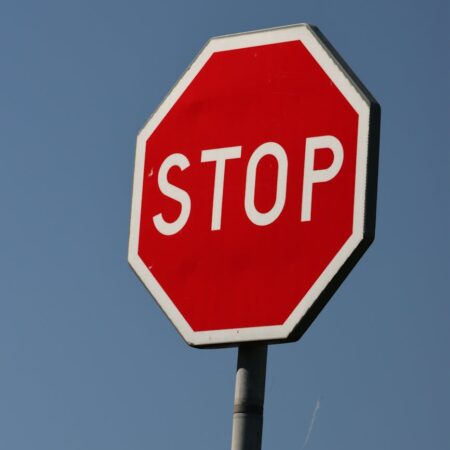
When was the last time you rolled through a stop sign?
It clearly says STOP. But do we always stop?
When was the last time you drove a little over the speed limit?
And here is another simple question.
Think about the road closest to your home.
What is the speed limit there?
Do you know it?
And if you do know it… do you always follow it?
So let us ask the question again.
When was the last time you broke traffic law?
Because the truth is that we are all products of the environment around us.
Children and teenagers learn from what they see.
They see adults roll through stop signs.
They see drivers gambling with red lights.
They see cars parked where they should not be.
They see shortcuts taken every day.
And because those behaviours become normal for us, they become normal for them.
Responsibility and Vulnerability
So here is another uncomfortable question.
Is it really fair to blame them?
Is it fair to criticise young people for doing exactly what they have learned from the behaviour around them?
Because there is one very important difference.
Those teenagers on scooters…
On bicycles…
On foot…
They are far more vulnerable than those of us sitting inside cars.
They are the ones most exposed to the consequences of risk.
And yet the behaviour they see, and learn from, often comes from the people who are most protected.
Where Road Safety Really Begins
When we talk about road safety, it is easy to focus on the behaviour of others.
Teenagers.
Cyclists.
Scooter riders.
Pedestrians.
But the foundations of road safety do not begin with them.
They begin with us.
With the choices we make.
With the attitudes we carry.
And with the example we demonstrate every single day.
Because the most powerful lessons are rarely delivered.
They are demonstrated.

Other Articles

Every 20 Seconds
When the Road Runs Out