

There is a quiet trick your brain plays on you every day, and most of us never notice it.
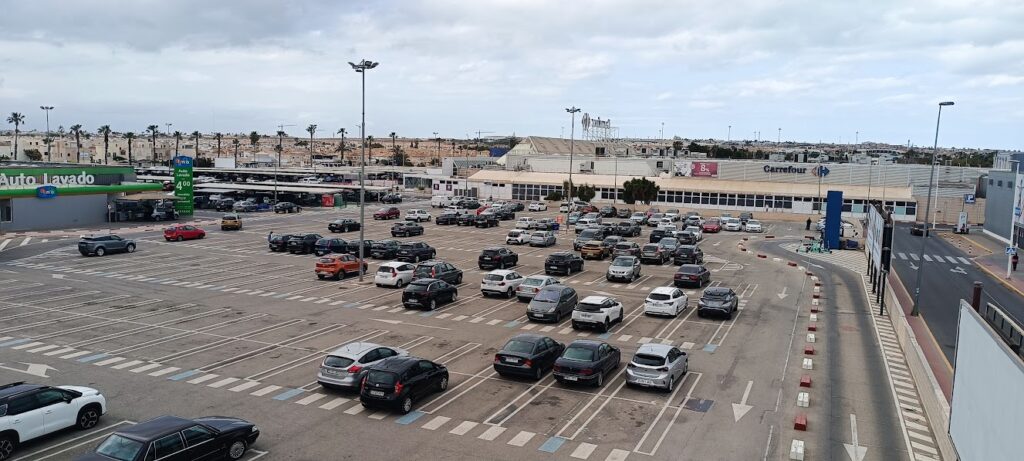
You park at a large shopping centre. The building is right there in front of you. You can see the entrance, the doors, the people going in and out. You step out of the car and walk towards it without a second thought.
It does not feel far.
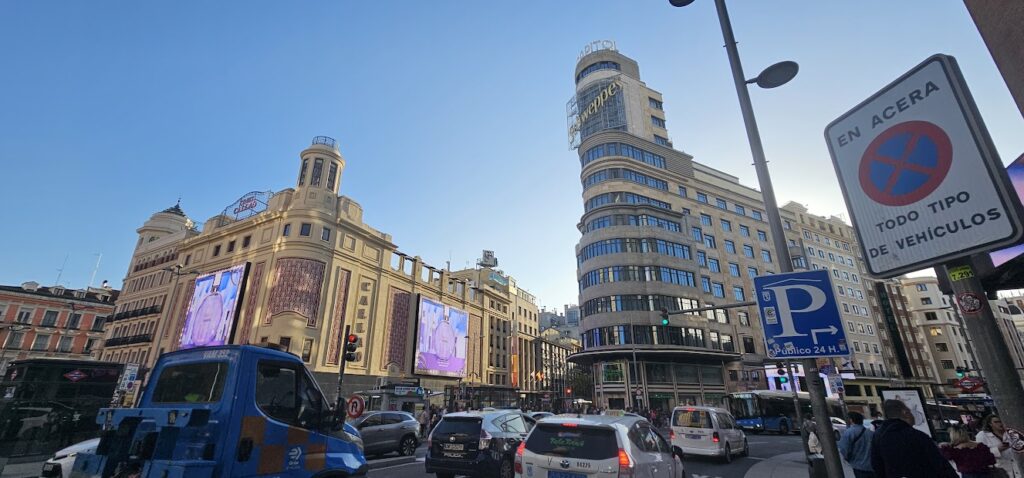
Now imagine parking the same distance away in a town centre. You cannot see your destination. Streets bend, buildings block your view, and the route is broken into segments.
Suddenly, the exact same distance feels longer.
Nothing has changed physically. But everything has changed psychologically.
Article Contents
The Brain Does Not Measure Distance — It Interprets It
In simple terms, we do not experience distance in metres. We experience it through visibility, structure, and expectation.
Psychologists refer to this broadly as perceived or cognitive distance, and it is closely linked to the goal gradient effect, first explored by Clark L. Hull. When we can clearly see a goal, it feels closer and more achievable. When it is hidden or fragmented, it feels further away and more effortful.
Urban design has understood this for decades. Kevin Lynch described this as legibility — how easily a space can be understood and navigated. Open, visible layouts feel simpler and shorter. Broken, obstructed layouts feel longer and more complex.
This is not just about walking.
It directly affects how we drive.
From Car Parks to City Streets
A shopping centre car park is designed with clarity:
- You can see where you are going
- The route is simple and direct
- Your brain registers progress immediately
A town or city is very different:
- Buildings interrupt your view
- Junctions break the journey into stages
- You cannot see the end point
The result is subtle but important:
When we cannot see where we are going, the journey feels longer than it really is.
And when something feels longer, we instinctively want to reduce it.
Where Speed Enters the Equation
This is where perception turns into behaviour.
If a journey feels longer:
- We feel delayed
- We feel the need to “make progress”
- We may increase speed to compensate
But here is the problem:
The feeling is not based on reality. It is based on perception.
This creates a dangerous mismatch:
- The environment is complex and unpredictable
- But the driver is trying to recover “lost time” that was never actually lost
The result is familiar:
- Increased speed in built-up areas
- Reduced reaction time
- Higher risk for pedestrians, cyclists, and other drivers
The Aircraft Illusion: A Powerful Comparison
This same principle exists far beyond the road.
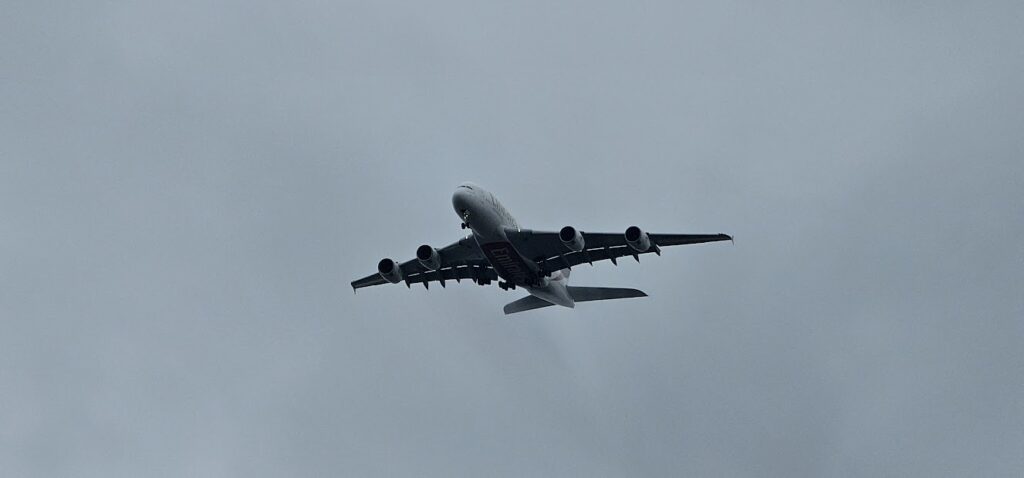
Look up at an aircraft cruising overhead. It appears slow, calm, almost drifting. In reality, it is travelling at hundreds of kilometres per hour.
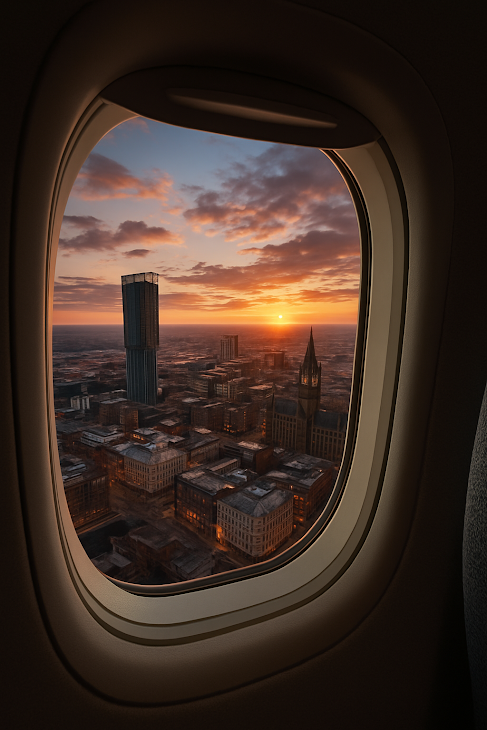
Look down from that same aircraft, and the ground seems to move gently beneath you.
Both perspectives are wrong.
They are shaped by distance and visual reference points, not by actual speed.
The further away something is, the slower it appears — regardless of how fast it is moving.
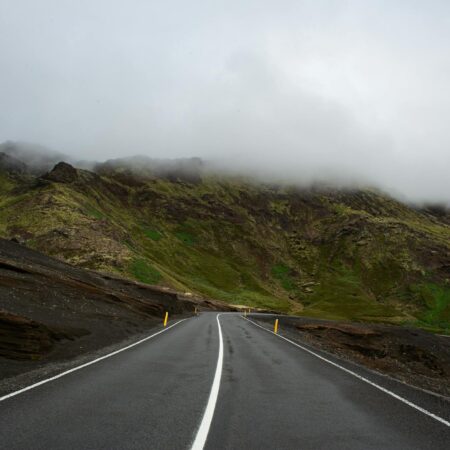
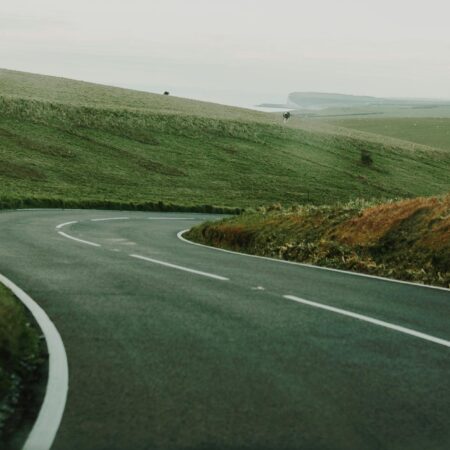
This is exactly what happens on open roads:
- Long sightlines
- Few nearby reference points
- Speed feels lower than it really is
And in towns:
- Close objects
- Constant visual interruption
- Movement feels urgent and pressured
Different environments. Same illusion.
Two Illusions, One Risk
We now have two sides of the same problem:
- On open roads, speed feels slower than it is
- In towns, distance feels longer than it is
Both lead to the same outcome:
Speed becomes disconnected from reality
One encourages overconfidence.
The other encourages urgency.
Neither supports safe driving.
The Road Safety Reality
Speed limits are not arbitrary. They reflect:
- Visibility
- Reaction time
- The likelihood of unexpected hazards
In urban environments, the issue is not distance. It is uncertainty.
You are not driving for what you can see.
You are driving for what you cannot yet see.
A Simple Rule That Cuts Through the Illusion
If there is one principle that brings all of this together, it is this:
If you cannot see it, slow down for it.
Not because you are far away.
Not because you are late.
But because your perception is incomplete.
Final Thought
A plane at high altitude can look slow.
A short journey through a town can feel long.
Both are illusions.
And, much as speed creates the illusion of time, it reminds us of the same truth:
It is not how fast it feels — it is how safe it actually is.