

When people think about road safety, they often think about speed limits, traffic signs, or vehicle technology.
Much less attention is given to something far simpler: colour.
Yet colour plays an important role in how we see and react to the world around us. On the road, where visibility and reaction time can determine safety, the colour someone wears can make a significant difference.
Among all colours, one consistently stands out.
Yellow.
Contents
The Science of Visibility
Yellow is widely recognised as one of the most visible colours to the human eye. This is not simply a matter of preference; it relates to how human vision works.
The human eye is particularly sensitive to wavelengths in the yellow-green portion of the spectrum. Because of this sensitivity, yellow objects tend to appear brighter and more noticeable, especially in daylight conditions.
For this reason, many safety organisations and transport authorities recognise yellow as one of the most effective colours for attracting attention.
The U.S. National Highway Traffic Safety Administration and various transport research bodies have long noted that high-visibility clothing significantly improves detection distances for drivers.
Similarly, research into conspicuity — the ability of an object to stand out from its surroundings — consistently identifies bright yellow and fluorescent yellow-green as among the most effective colours for detection on roads.
In simple terms, yellow helps people be seen sooner.
And on the road, seeing something sooner means having more time to react.
Why School Buses Are Yellow
One of the most famous examples of yellow being used for safety is the school bus.
Across North America, school buses are painted in a distinctive shade often referred to as “National School Bus Glossy Yellow.”
The colour was standardised in the United States in the 1930s when educators and safety experts gathered to establish national standards for transporting school children.
The colour was chosen for a simple reason.
It was highly visible in both daylight and low-light conditions.
It also contrasted strongly with the black lettering used on the vehicles, making warning messages easier to read.
Even in poor weather conditions such as rain or fog, yellow vehicles remain easier to detect than many darker colours.
Today the colour remains a defining feature of school buses and is recognised internationally as a symbol of child safety.
Yellow and Emergency Vehicles
In recent years, some emergency services have also begun adopting yellow or fluorescent yellow-green for their vehicles.
While traditional fire engines in many countries were historically painted red, studies have shown that high-visibility colours can improve detection by drivers, particularly in complex urban environments.
As a result, some fire departments and emergency services have experimented with yellow or lime-green vehicles to increase visibility and reduce the risk of collisions involving emergency responders.
The logic is straightforward.
If a vehicle can be seen sooner, drivers have more time to react.
Colour and the Project Understanding Ecosystem
Colour also plays a role in the educational structure of Project Understanding.
The project follows a progression that reflects both learning and responsibility.
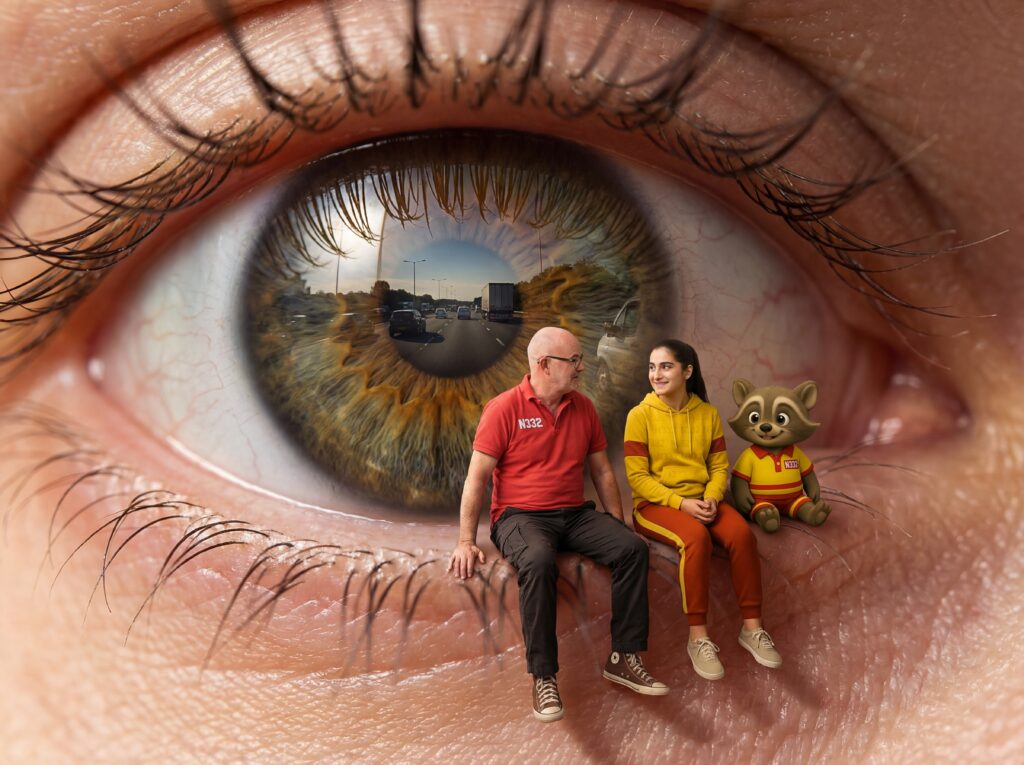
At the earliest stage, Trafford, the road safety raccoon, wears yellow. This reflects the emphasis on visibility, awareness, and early learning.
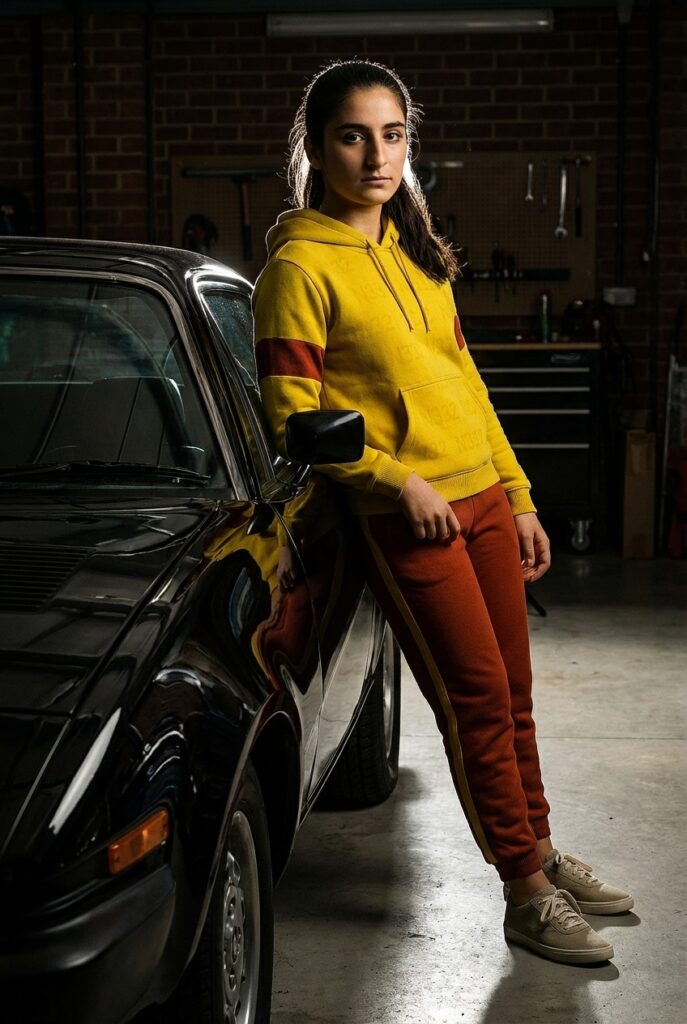
As the audience grows older, the character Riley begins to transition toward adulthood. Her clothing incorporates both yellow and red, symbolising the movement from early awareness toward responsibility.
At the adult level, the N332 initiative uses red more prominently, reflecting the seriousness of traffic law and the responsibilities that come with driving.
The colour progression mirrors the learning journey.
Yellow represents awareness and attention.
Red represents responsibility and consequences.
Normalising Yellow
There is another reason yellow appears frequently within the project.
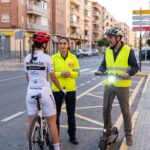
When speaking to schoolchildren, the presenter deliberately wears yellow clothing.
This is done for a simple purpose: to normalise the colour.
Children notice colours quickly. By repeatedly seeing yellow associated with safety messages and positive role models, the colour becomes familiar rather than unusual.
Over time, that familiarity can influence behaviour.
If children grow up seeing yellow as a normal and positive colour to wear on the road, they are more likely to choose visible clothing when walking, cycling, or travelling independently.
The Visibility of Vulnerable Road Users
Not everyone on the road has the protection of a vehicle.
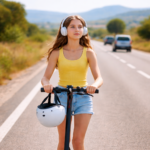
Pedestrians, cyclists, and scooter riders are far more exposed to risk.
For these road users, being seen is one of the most important factors in preventing collisions.
High-visibility clothing does not guarantee safety, but it increases the likelihood that drivers will notice someone sooner.
And as Project Understanding frequently emphasises, time is one of the most important elements of safety.
The earlier something is seen, the more time the brain has to recognise it and respond.

A Simple Choice
The colour someone wears will never replace responsible driving, safe road design, or effective traffic law.
But small choices can still have meaningful effects.
Choosing brighter clothing when walking or cycling at night.
Wearing a visible jacket on a scooter or bicycle.
Encouraging children to wear colours that stand out.
These are simple actions, yet they help create a road environment where people can see each other sooner and respond more safely.
Yellow may seem like a small detail.
But sometimes the smallest details can make the biggest difference.

Other Articles

When Tragedy Becomes Blame