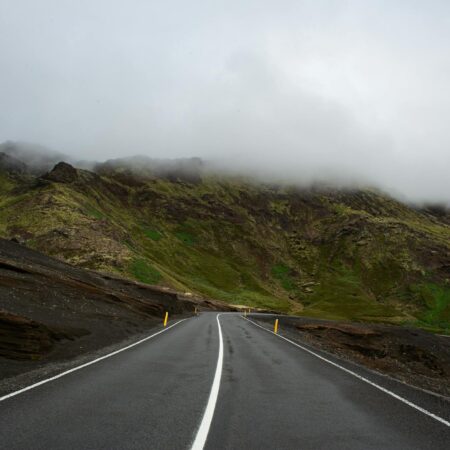
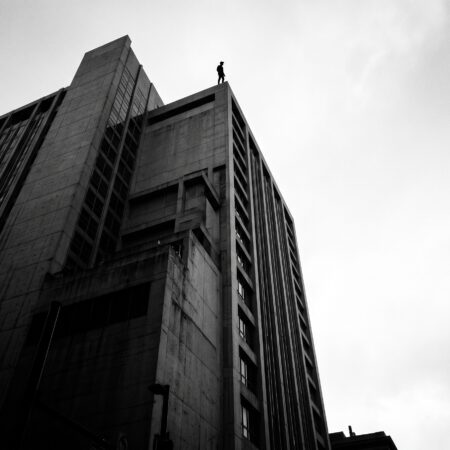

A child is still a child, a mother is still a mother, a brother is still a brother, a friend is still a friend… abd yet, place the same person on the ledge of a tall building, or place then-m riding a scooter or bicycle, and the perception of that person is suddenly reframed. They are the same person, equally vulnerable, and yet we may instictivly wish to save one version, and instinctively see the other as a hindrence.
Imagine looking up from a busy town street and spotting a twelve-year-old child balancing on the narrow stone ledge of a four-storey building.
The human reaction from every adult watching below is immediate, visceral, and unanimous. Your breath catches. Your heart climbs into your throat. Someone screams for help; others drop their bags and search frantically for a way to break a fall. Nobody glances at their wristwatch. Nobody checks whether they are running late for a morning appointment. Crucially, not a single person on that street stands below shouting: “You should not be standing there, that is an unauthorised space!” or “Get out of the way, you are holding up my morning!”
The sheer physical frailty of that young person, suspended above a fatal drop, demands unconditional adult empathy and collective protection.
Now take that exact same child.
Step off the ledge, walk around the corner, and place them on a two-wheeled piece of lightweight aluminium, travelling along the gutter of a 50 km/h urban street on an electric scooter or a bicycle.
In an instant, the adult emotional landscape transforms completely.
The child is suddenly no longer perceived as a fragile human life in need of collective vigilance. They are an obstacle. An inconvenience. An annoyance holding back the flow of traffic. The adult behind the wheel of a two-tonne metal machine feels irritation rise, sighs at the delay, and feels an instinctual right to squeeze past their handlebars with barely forty centimetres of clearance, revving the engine to signal disapproval.
Yet the kinetic reality of those two scenarios is indistinguishable.
A body falling from a four-storey window converts potential gravitational energy into sudden, catastrophic impact when it meets the pavement. A body struck by a two-tonne vehicle travelling at standard urban speeds absorbs an identical, devastating transfer of kinetic energy to bone, skull, and internal organs. The trauma ward makes no distinction between the concrete below a high wall and the asphalt of a city street.
The only factor that alters between those two situations is adult perception.
On the high ledge, we see human vulnerability in its purest form, and our instinct is to protect. On the road, our vision is filtered through the windscreen of a motor car, warped by a subconscious culture of vehicle entitlement and territorial ownership. We see the street as our space, the clock as our master, and any vulnerable user navigating the margins as an intruder who should simply get out of our way.
Children navigating our road networks do not possess crumple zones, side-impact air curtains, or reinforced steel safety cells. They possess only their skin, their bones, and their emerging, developing brains.
When we dehumanise a young rider or pedestrian into an inconvenient traffic obstruction, we abandon our basic duty of care. Every child on our streets is balanced on a high ledge. Their safety, their future, and their very survival depend entirely on the choices, patience, and responsibility of the adults holding the steering wheel.
It is time we opened our eyes to that vulnerability, took our foot off the accelerator, and offered our young road users the same unconditional protection on the tarmac that we would give them on the ledge.